Article: A Potters top for a Ceramicist - a talk with Faye Magkanari, founder of Tokamini
A Potters top for a Ceramicist - a talk with Faye Magkanari, founder of Tokamini

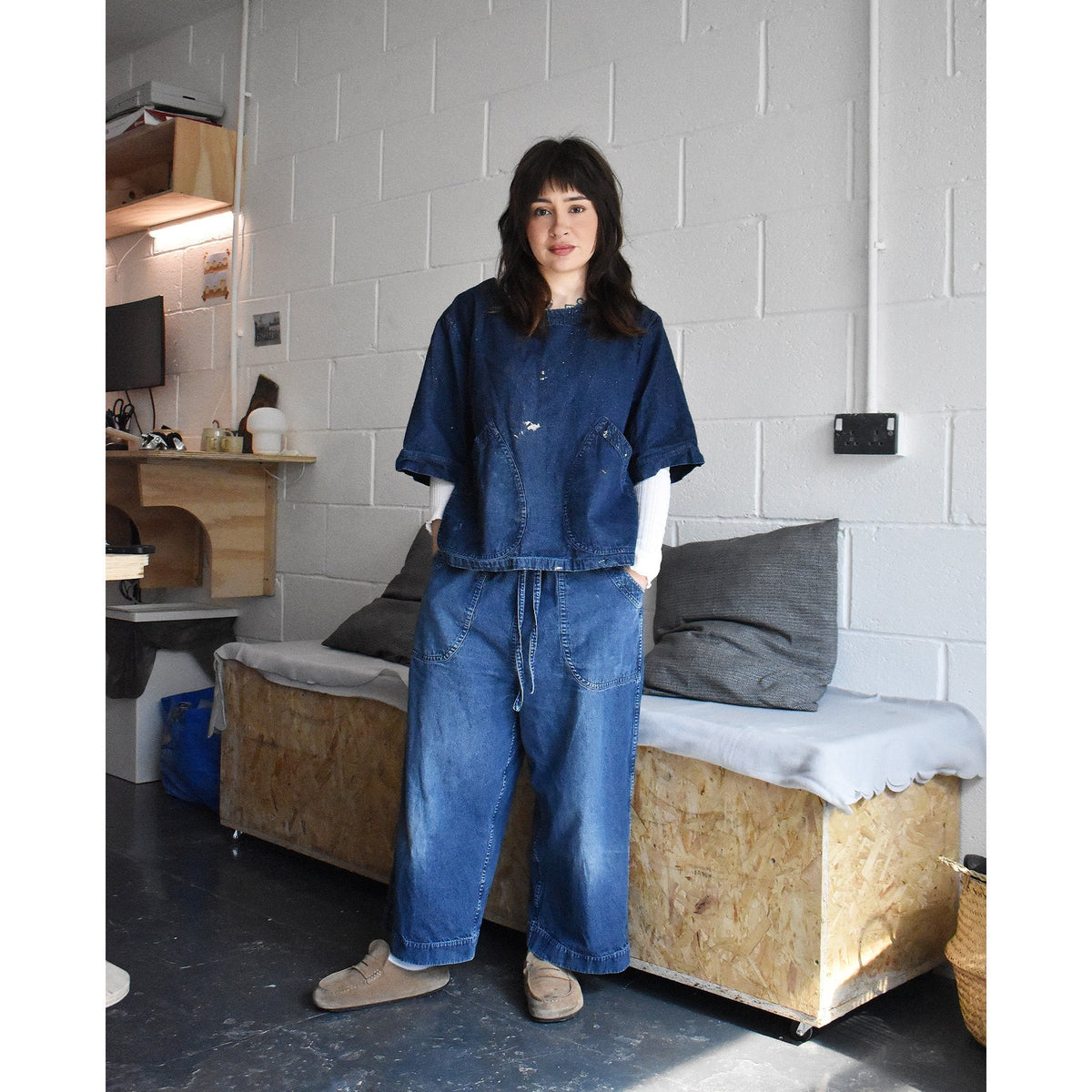
When we started Pajotten we wanted to create everyday clothes that people would want to wear every day, our design references have always come from simple workwear so its always hugely exciting for us when people genuinely work in them. Faye has been wearing Pajotten for over four years now, and brilliantly she is not afraid of putting them to the test and getting them dirty while she works as a ceramicist, we have long been a fan of her work so when a few months ago she launched Tokamini officially we treated ourselves to some of her collection and now enjoy drinking from her mugs at the workshop, I swear it makes every drink taste better.
Faye was kind enough to agree to an interview to tell you about what she does and we share it for you here, links to her website and Instagram account are shown at the bottom of the interview and well worth visiting.
Tell us about the business and why you started it
It is a small, brand-new ceramics business currently based in the North East of the England. Tokamini came about after a long period of winter blues, when I was contemplating my goals, to be candid, something was missing. Something into which I could pour all my creativity, blood, love, and tears. Something I could care deeply about.
Q. Tell us about the name of the business
Tokamini (tó-kameení), or “το καμίνι” in Greek, means the kiln, but not only the kiln. It is the place that keeps you warm, the place you cook in, for larger kilns the place where you fire your work, the place where bricks are made. It encompasses both domestic and industrial life, something that personally resonates with me and can be seen within the art of clay. From beautiful culinary forms to large industrial pieces, the art of ceramics and clay is never-ending, and hopefully that is reflected in my work and products.

Q: When did you first work with clay?
A: Around age 13, at a workshop near my house in Athens run by a woman named Margarita. I originally went to prepare for Fine Art School, but I fell in love with clay and eventually helped her teach younger kids.
Q: What was the first thing you made?
A: An ashtray when I was fifteen — embarrassing, but I was proud to use something I’d made myself.
Q: Do you get the same feeling now when you make a cup?
A: Absolutely. People love saying “I made that” and then using it, the pride comes from making your own.
Q: What were the stages between learning clay as a teenager and owning your own studio?
A: So, I didn't do anything with clay for years. Until I got interested in it again, because of the facilities we had mainly in university. I went to Newcastle uni and we had to pay for a lot of materials and facilities as a student, but one of the things that you didn’t need to pay for was kiln firings.
There was a lot of free clay lying around the department because people didn't use it and people didn't recycle it.
So having had previous experience with it I decided to dabble with it again, and it sort of took off from there.

Q: You focused on large hand built pots for a while. Why?
A: Scale. I wanted to see how big I could go while I had access to the facilities. Doing that work now would be expensive, so I pushed myself while I could.
Q: How did you shift from large pots to the domestic ware you make now?
A: I love trying new things. After a year and a half of coil building, I got into digital design — Fusion 360, Blender — And then I started thinking about slip casting and the history of slip casting and industrialisation of pottery in the UK specifically.
It all tied together for me.
Q: Where’s the creative part for you?
A: All of it — the casting, trimming, glaze testing. It's difficult to learn, but you have to get into the process of it and learn how you cast, trim, and how you sponge them all down without breaking them. Not to even get started on the long testing process of glazes and possible designs.
And I’m not just a ceramic artist; I’ve done metalwork, woodwork, digital design. Clay is my first love, but I don’t want to be known only as a potter.
Q: What piece are you most proud of?
A: The cup. It’s simple but incredibly versatile — and I love that.
 Q: Is Tokamini an outlet for that broader creativity?
A: Yes. I wanted a business not tied to my name. Tokamini lets me collaborate, expand, and make whatever I want — domestic pottery now, but it could become plant pots, woodwork, metalwork. I want people to use what I make and enjoy it in their everyday rituals.Tokamini is a business that I wanted to make for a while.
It wasn't always going to be called that, but I always wanted to try and exclude myself as a name from work I do.
I've always thought of it as a thing where I can get other people to collaborate and work alongside me as well. I had struggled with being just an “artist” and you go and exhibit with your name, it felt weird and I just didn’t like it.
So that’s how the idea of a business came along, but saying I’m just a potter and how that correlates when I make domestic wears is that I believe Tokamini can morph and develop in the future. You know it could start with domestic pottery, then do big plant pots. Or even woodwork and metal work.
I always wanted people to use the things I make though, whether I make a porcelain lamp or a plant pot or even a plain mug, I want my work to be there to elevate someone’s day to day experience, enjoy something beautiful in their house.

Q: What challenges come with running the business?
A: Financial viability. Tokamini is only four months old, and I still need another job to support myself and the business. But I couldn’t go through life without making things.
Q: What does a normal working day look like?
A: I try to be in the studio by 10am. I work on whatever needs doing — packaging, making, social media, the website, woodwork, cleaning. I finish around 4:30, then go straight to my other job until late.
Q: What does downtime look like?
A: I spend it with my partner when our schedules overlap — usually cooking together. I also love knitting and crocheting.
Q: What are you watching or reading at the moment?
A: The fourth season of Love on the Spectrum — an emotional rollercoaster. And my favourite book is The Murderess by Alexandros Papadiamandis, recently translated into English.

Q: Why do you enjoy wearing Pajotten day to day?
A: It fits my aesthetic and it’s incredibly durable. I can work comfortably all day and still get compliments at my other job. They’re clothes you naturally reach for — beautiful and comfortable. I feel it’s on par with a slower pace of living that I support. Take your time with your coffee, sit and enjoy the things around you. Feel privileged to have the things you have. I believe Pajotten falls in exactly the same category for me, I enjoy wearing your clothes. From mugs to clothes I think they can really change your day to day life. We need to start putting meaning and value into the small rituals we do everyday,
Q: What’s your favourite Pajotten garment?
A: The Pinafore dress I got in January. I’ve worn it almost every day since. It’s flowy, comfortable, and has massive pockets, the amount of things I can fit in them I almost don’t need a bag!
Q: Where can people find you?
A: My studio is in Ouseburn, Newcastle upon Tyne — 4 Hannington Street, NE6 1JT.
You can follow me on Instagram @_tokamini or visit my website: https://tokamini.com